The MSRP, or Manufacturer's Suggested Retail Price, is a retail price recommendation provided by the manufacturer of a product. This price is generally used as a reference point for retailers when they set the final sale price of the product.
Retailers often use the MSRP as a starting point to set their own sale prices. They may choose to sell the product at the MSRP, below the MSRP (to offer a discount), or above the MSRP (in high-demand situations).
Why is it important?
The MSRP helps retailers set prices consistently and allows for better margin management. Some retailers actively seek significant margins for products that are popular.
Indicating the suggested retail price (MSRP) for each product is necessary for enabling POS (Point of Sale) integrations.
The suggested retail price is also an indicator of reliability from the producer. A good understanding of the market is necessary to estimate the right price. Similarly, it is an interesting indicator for the retailer, who can then estimate their market positioning for a given product.

Indicating an MSRP is a good business practice as it helps to standardize relationships with your customers.
Mark-up or Margin?
The suggested retail price is calculated by adding a marginal price to a cost price. There are 2 simple methods to obtain the suggested retail price:
Mark-up
Definition: The mark-up is the amount added to the cost price of a product to determine its selling price.
Calculation:

- Goal: The markup is used to ensure that the selling price covers the cost of the product and generates a profit.
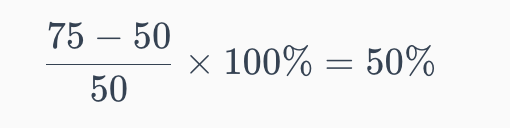
- For instance, if a $50 item sells for $75, the markup is:
Marging
Definition : The margin (or gross margin) is the percentage of the selling price that represents the profit.
Calculation :

Objective: The margin is used to understand the profitability of a product in relation to its selling price.
Example: Using the same figures, if a product costs $50 and is sold for $75, the margin is:

Key Differences
Basis of Calculation: Markup is calculated based on cost price, while margin is calculated based on selling price.
Focus: Markup focuses on covering costs and generating profit, while margin focuses on profitability relative to the selling price.
Usage: Markup is often used in pricing strategies to set selling prices, while margin is used to evaluate sales profitability.
The MSRP is calculated as follows:

Thus, the margin represents the % of profit on the final price.
Example:
Suppose the production cost of a product is $50 and you want a 30% margin on the selling price.

Thus, the final sale price will be around $71.45.
How does one go about it?
In the "Price" module of your account, select the edit button for your product. After deciding on a selling price, you can enter the suggested retail price and control the margin and price with taxes included in the covered regions by clicking "Suggest a Retail Price."
Was this article helpful?
That’s Great!
Thank you for your feedback
Sorry! We couldn't be helpful
Thank you for your feedback
Feedback sent
We appreciate your effort and will try to fix the article